Internationalisation Days
Building (digital) bridges: testimony, memory-making, and resilience
Departmental days for Internationalisation 2026
2nd MARCH (room Seminari, U6 Agorà Building, 4° floor)
- 9.30 a.m. - 11.30 a.m. || Keynote session
-
Dr. Abeer Otman, PhD, Postdoctoral Fellow, Università di Milano-Bicocca - From Gaza to the World: A Counter Strike Against Genocide
“بدنا نوصل صوتنا للعالم” -
Dr. Mohamed Abu Shawish, PhD, Trauma Therapy Institute- Gaza - The digital presence as an act of memory and psychosocial healing: a case study of social media use in the Gaza strip post-October 7, 2023
- Chair
Prof. Guido Veronese, PhD, Università di Milano-Bicocca
- Discussant
Prof. Mauro Van Aken, PhD, Università di Milano-Bicocca
- 14.30 p.m. - 16.30 p.m. || Research funding programmes: operational overviews and experiences
Workshop by the Grant Office
- Dr. Federica Fumagalli e Dr. Giulia Dallari, Direzione Generale Centro Servizi di Scienze della Formazione, Università degli Studi di Milano-Bicocca
Understanding the FIS Program and the Starting Grant Scheme: an open discussion.
- Dr. Davide Cino, PhD, Researcher, Università di Milano-Bicocca
3nd MARCH, 11.00 a.m. - 13.00 p.m. (room Polivalente, U6 Agorà Building, 4° floor)
- Award ceremony of the “Internationalization Days”
- Poster presentation of the 2025 Edition winners
Refreshments
Guests 2026
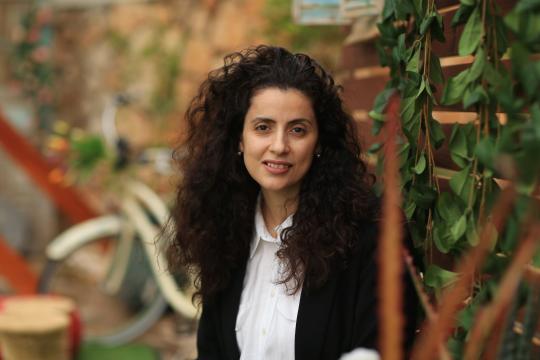
Dr. Abeer Otman (PhD) is a Palestinian mother, social worker, and researcher. She is currently a postdoctoral fellow at the University of Milano–Bicocca, where her work examines father–child relationalities in Gaza under conditions of genocide. Her doctoral research examined Fatherhood in the Settler Colonial Context: The Case of Occupied East Jerusalem.
In addition, her broader research explores Palestinian students’ experiences of livability, survivability, refusal, and futurity within settler colonial higher education systems.
From Gaza to the World: A Counter Strike Against Genocide
“بدنا نوصل صوتنا للعالم”
This presentation examines the methodological and decolonial implications of researching a genocide as it is being live-streamed by its survivors. The extensive circulation of videos and photographs produced by Gazans during Israel’s genocidal war raises urgent questions about why they insist on sharing their own traumatization and resistance. What forms of interaction and relationality they seek from viewers, and how they interpret local and global engagements with their testimonies. These digital archives—created in real time and under conditions of annihilation—compel indigenous and anti-colonial scholars to think about how we read, receive, and ethically respond to the Gaza genocide as it unfolds before us.
Drawing on debates in the philosophy of knowledge and decolonial media studies, the presentation interrogates the status of digital testimony as both data and epistemology. While scholars advocating the decolonization of digital media highlight how online platforms can enable indigenous worldmaking, language, and epistemic autonomy, others question the scientific reliability of such material, leading some academic journals to dismiss research grounded primarily in digital documentation of the genocide. I argue that, in a context where Gazans’ experiences are mediated through the very technologies they use to assert presence, rejecting digital testimony constitutes epistemic violence.
Focusing on Gaza’s live-streamed genocide as a life-and-death methodological terrain, the presentation contends that digital testimonies are not ancillary sources but indispensable archives of Indigenous witnessing. In a historical moment when struggles extend across media, social media, and academic arenas, colonized populations must confront and reshape the epistemic structures that govern their visibility. Methodological engagement with these digital archives is therefore not only justified but necessary; it constitutes a decolonial practice through which the oppressed assert their authority to narrate, document, and theorize their own survival and liberation.
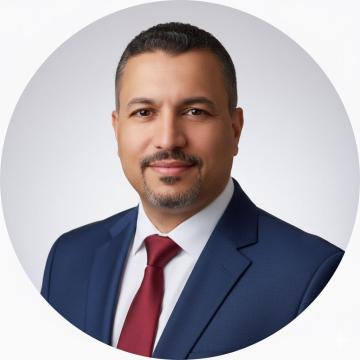
Dr. Mohamed Abu Shawish, PhD in Clinical Psychology, Cofounder of Trauma Therapy Institute- Gaza, with extensive experience in designing and implementing self- care programs, professional supervision, training, project development, and research in health and mental health fields. Certified trainer from WHO for the Mental Health Gap (MHGAP) and Mind-Body Medicine. Lecturer at various Palestinian universities and mental health consultant with international experience.
The digital presence as an act of memory and psychosocial healing: a case study of social media use in the Gaza strip post-October 7, 2023
This presentation investigates the dual role of social media as a tool for narrative resistance and a mechanism for collective healing within the complex geopolitical context of the Gaza Strip following October 7, 2023. Drawing upon the theoretical legacy of Edward Bernays "Engineering of Consent" and Freudian concepts of the Collective Unconscious, the presentation analyzes how the traditional narrative monopoly is disrupted by direct digital presence. The study reveals that digital broadcasting not only serves as crucial documentation of events (Narrative Resistance) but also fulfills a vital psychosocial function in trauma validation and restoring agency in an environment stripped of control.
The presentation concludes that this online "narrative struggle" constitutes a novel form of Digital Sumud (Digital Steadfastness), essential for memory construction and psychological resilience against systemic erasure.
In line with the objectives of the Inter-Commission for Internationalisation and with the DISUF Programme Document 2024-2026, the award aims at enhancing the internationalisation of researches carried out by resear4ch fellows and PhD students belonging to the Department of Human Sciences for Education "Riccardo Massa". The award is one of the initiatives of the "Internationalisation Days" promoted by the Department.
Implementing international researches is one of the strategic objectives of our University. Early-career scholars (PhD students and research fellows) often cope with extra challenges to improve the visibility to their research within their scientific community. Therefore, the Inter-Commission for Internationalisation promotes, within the framework of the "Internationalisation Days", an award for PhD students and research fellows.
The action aims to encourage the international dimension of their research projects. The prizes linked to that award will support the presentation of the research in international contexts (publications, participation in conferences).
The award is open exclusively to PhD students and research fellows belonging to the Department of Human Sciences for Education "Riccardo Massa". Applicants should produce a concept note of no more than 10000 characters structured as follows:
- Foreword and background
- Research question
- Methods
- Research implementation plan
- Expected results
- International follow-up of the research
Concept notes should be sent in pdf format by 24 January 2026 (17.00 CET) to internazionalizzazione_DISUF@unimib.it.
Applicants can choose whether to submit the concept note in Italian or English, justifying their choice.
In addition, applicants must attach a draft of a working plan (maximum one page) illustrating the use of the award by indicating:
- Timing
- Type of expenditure. Eligible expenses are: publications in open access journals, international conference fees, expenses related to presentations at international symposia or seminars.
The concept notes will be evaluated by the Organising Committee - Jury based on the following criteria:
- Clarity, rigour and coherence of the research framework - max.20 points
- Relevance, originality and innovation - max. 20 points
- International outlook (breadth of literature, collaborations, periods abroad) - max 20 points
The Organizing Committee is composed by Davide Cino, Stefano Malatesta, Guido Veronese.
The Jury is composed by Cristina Palmieri, Alice Bellagamba, Claudia Bonsi, Chiara Bove, Davide Cino, Edoardo Datteri, Stefano Malatesta, Guido Veronese, Franca Zuccoli.
- The work of the Organising Committee - Jury will end on 15 February 2025.
- Two separate rankings will be drawn up: 1. PhD students and 2. research fellows.
- The final rankings will be announced on the last day of the Internationalisation Days.
- A certificate of merit will be awarded to the top three in the two rankings.
- Each list will indicate a winner (who will receive a prize of €1200.00) and a second winner (who will receive a prize of €750.00) to be used mandatorily before the end of the research contract or doctoral period
- In the event of a tie, the youngest candidates will be awarded the prize.
- In the event of renouncement of the prize or expiry of the time limit for its use, the Jury will award the prize to the second (or possibly third) placed in the ranking.
In cases where a member of the Jury has among the candidates one or more individuals with whom they collaborate directly and therefore cannot cast their vote, an alternate juror from the same disciplinary field will be appointed—only for that specific situation—to ensure uniformity in the number of evaluations for each candidate.
Gallery of awards - 2022 edition
PhD Students
- Camilla Carabini (Internationalisation Award)
- Valeria Cotza
- Lucia Carriera
PostDoc Fellows
- Federica Cavazzoni (Internationalisation Award)
- Elisa Farina
- Chiara Carla Montà
Gallery of awards - 2023 edition
PhD Students
- Anna Chinazzi
- Alessandra Maiorano
PostDoc Fellows
- Alessandra Mussi
- Elena Bartolini
Gallery of awards - 2024 edition
PhD Students
- Daniele Mario Buonomo
- Costanza Franceschini
PostDoc Fellows
- Silvy Boccaletti
- Cristina Liviana Caldiroli
Gallery of awards - 2025 edition
PhD Students
- Eugenia Campanella
- Petar Lefterov
PostDoc Fellows
- Valeria Cotza
- Raul Zecca
Special mention
- Pietro Agnoletto
- Maria Ratotti
Gallery of awards - 2025 edition
PhD Students
- Floriana Marinelli
- Fabiana Marchioro
PostDoc Fellows
- Giorgia Fasola
Special mention
- Alessia Zampieri