Challenges of Transformation: Monitoring Ongoing Changes in the Local Healthcare, Social, and Educational System for the Elderly. A Bottom-Up Qualitative Approach
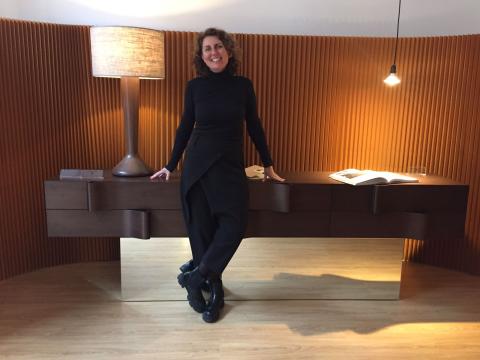
I am a doctoral student in Education in Contemporary Society at the University of Milan-Bicocca, enrolled in the 38th cycle. I hold a master’s degree in Nursing Science and another in Sociology, and I have a professional background as a nurse.
As part of my doctoral research, I am working on the AGE-IT project, promoted by PNRR funds, specifically on a project titled “Challenges of Transformation: Monitoring Ongoing Changes in the Local Healthcare, Social, and Educational System for the Elderly. A Bottom-Up Qualitative Approach”. I am interested in a multi-faceted approach to the concept of public health, professionals, organizations, and policies.
I am seeking to draw on more than 25 years of experience in the field of health studies to deepen my understanding of how to improve the well-being of older adults, which could be further expanded through the ESC PhD Program.
My bottom-up qualitative research explores the configuration of community care services through the perspectives of both users and professionals. The study is grounded in a reflexive and participatory approach that embraces the complexity of life course transitions, particularly in later life. Drawing on the theoretical framework of complex systems theory (Bateson), the project considers care not as a linear provision of services, but as a network of dynamic relationships and evolving meanings, embedded in social, institutional, and biographical contexts.
At the core of my research is the Listening Guide methodology, which emphasizes the voices of older adults, enabling a nuanced exploration of their subjective experiences and the internal tensions that emerge in narratives of transition. This method allows for a multi-layered reading of interviews, attentive to silences, contradictions, and the polyphonic nature of identity construction. In parallel, the research adopts a cooperative inquiry approach, fostering a space for co-reflection and co-learning between researchers and participants.
This study contributes to the ongoing debate on the transformation of professionalism in health and social care: it challenges traditional top-down models based on the expert–client relationship, promoting instead a relational model of professionalism, in which knowledge and the capacity to act are co-constructed. Older adults are therefore not treated as passive recipients of care, but as active subjects with the capacity to learn, choose, and act within their own contexts.
At the current stage of the project, we have reached a significant milestone with the first field meeting in the municipalities of Vernasca and Morfasso (Province of Piacenza). This meeting was dedicated to revisiting the themes addressed and will be followed by a meeting to return preliminary findings to both institutional stakeholders and the broader community of older adults—both those who participated in the interviews and those who did not. This feedback and dialogue phase is essential not only for ethical and methodological consistency, but also to strengthen the participatory nature of the research and validate the knowledge emerging from the field.
We are now entering a new phase of analysis. In collaboration with the AGE-IT research group, we are conducting a detailed coding of interview data using NVivo software. This analytic work focuses on identifying key themes and patterns in experiences of aging and care. At the same time, I am working on the first chapters of my dissertation and continuing with narrative analysis using the Listening Guide, deepening my understanding of how older adults make sense of their transitions and negotiate their roles within care systems. By integrating field engagement, theoretical reflection, and rigorous qualitative analysis, this research aims to contribute not only to academic debate but also to the development of more inclusive, responsive, and ethically grounded community care practices.