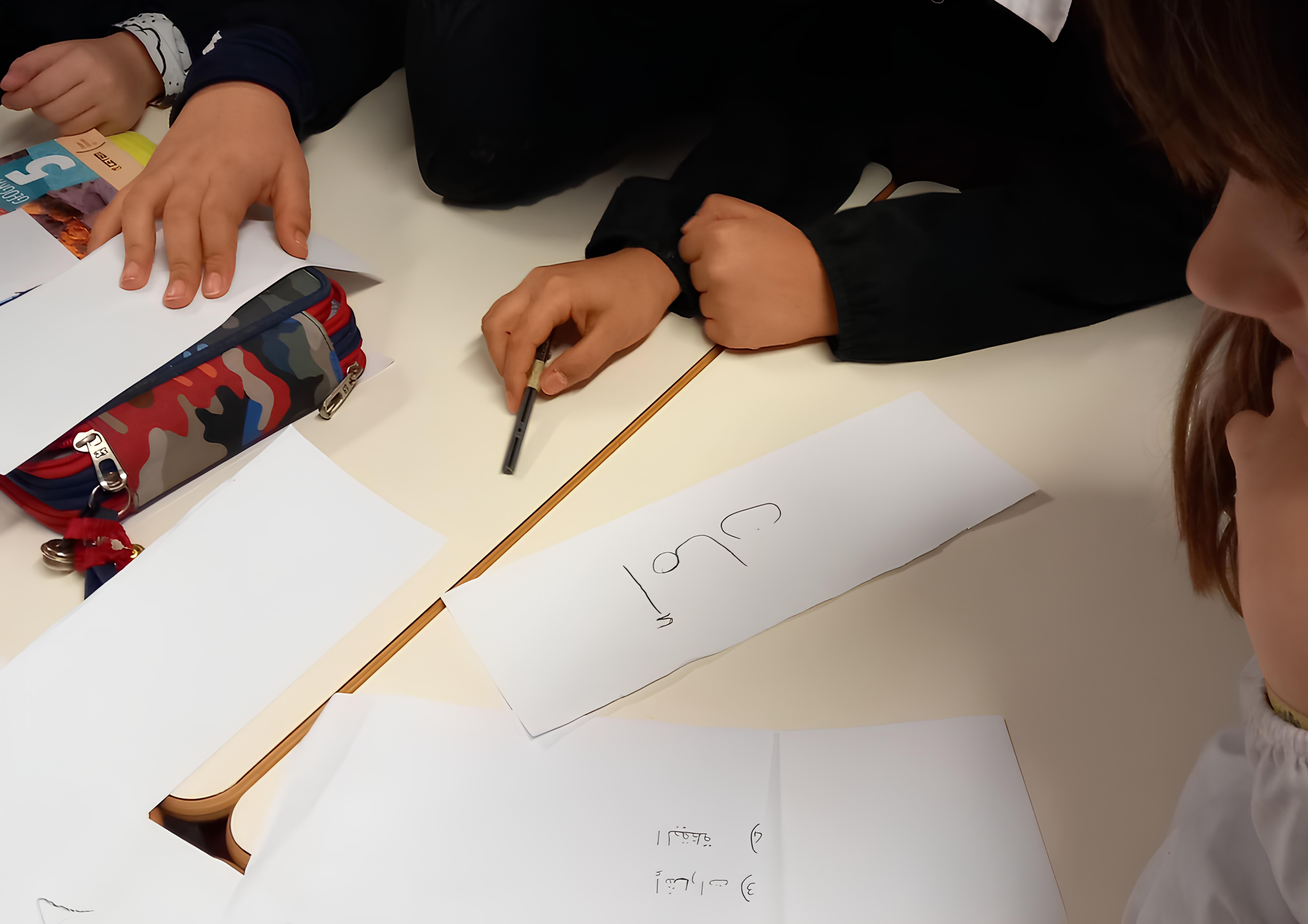
Bridging languages for school learning
My research interests emerge from a personal experience of living across languages and cultures.
Growing up within a multilingual environment led me, from an early stage, to reflect on the meanings that languages acquire within educational pathways, social relationships, and identity construction processes. From this biographical experience, a pedagogical reflection on multilingualism and on educational practices capable of valuing linguistic diversity within contemporary schools progressively developed.
Over time, my attention has focused on the ways educational institutions interpret linguistic plurality: not merely as an issue related to acquiring the dominant language, but as a complex terrain where belonging, recognition, and participation intersect. Within this perspective, I encountered the field of translanguaging pedagogy, which understands the linguistic resources of multilingual individuals not as separate systems, but as dynamic and integrated repertoires through which people learn, communicate, and construct meaning.
My doctoral research in Education in Contemporary Society explores the role of multilingualism within educational contexts, with particular attention to school practices involving students with migrant backgrounds. The project aims to investigate how the recognition and valorization of heritage languages can influence inclusion processes, school participation, and the construction of students’ linguistic and cultural identities.
The research develops through a field-based methodological approach combining the observation of educational practices, pedagogical reflection, and collaboration with teachers and school communities. My interest is directed not only toward teaching strategies themselves, but also toward the cultural and relational meanings that shape educational practices surrounding multilingualism. From this perspective, schools are observed as spaces where languages can either be marginalized or recognized as educational and cultural resources.
At the same time, the project engages with the international debate on translanguaging and inclusive language education, examining the tensions emerging between language policies, school practices, and students’ lived experiences. Particular attention is devoted to the relationship between language and identity, and to the ways linguistic biographies shape learning and participation processes.
At the core of my work lies the idea that multilingualism should not be understood as a challenge to manage, but rather as a constitutive dimension of contemporary societies and as a pedagogical opportunity to rethink education in more inclusive ways. Within this perspective, pedagogy does not simply provide instructional strategies, but creates critical spaces for reflecting on the recognition of linguistic and cultural diversity within schools and contemporary society.