Department of Human Sciences for Education “Riccardo Massa”
Excellence Department - Permanent Seminar and other events
Image

The various areas of focus within the Department of Excellence promote a wide range of events and seminar activities: the sessions of the Permanent Seminar, lectures and meetings with our international visiting scholars, and initiatives devised by members of the CAPTED Study Centre and by young researchers from CAPTED Next.
The result is a wide range of activities aimed at different audiences: from seminars between lecturers and researchers, to lectures by international guests for undergraduates and PhD students, right through to events open to the general public.
Meetings promoted as part of the Permanent Seminar
The Permanent Seminar promoted by CAPTED explores the "Educational and Sociocultural Changes and Potentials in the Digital Transition" through events aimed at academics, students, and the broader community.
These events seek to foster both internal discussion within the Department and stimulate international scientific dialogue on the topic, while also engaging students and local stakeholders.
FrancoAngeli Academy - Viale dell'Innovazione 11, Milano
A meeting to discuss how the way we conduct, present and share research in the humanities is changing in the age of social media
-
Aula Seminari, Edificio U6 Agorà (IV piano) - Piazza dell'Ateneo Nuovo 1, Milano
Also online - LINK
An event organised in collaboration with the PhD Programme in Education in Contemporary Society (ESC) and the RobotiCSS Lab
-
Aula Massa, Agorà building (4° floor) - Piazza dell'Ateneo Nuovo 1, Milan
Also online - LINK
Seminar conducted by Dr. Philipp Budka of the University of Vienna, in conversation with Dr. Paolo Grassi and doctoral students in Cultural and Social Anthropology involved in the Project of Excellence
Tuesday, 14 April, 4.30pm – 6.30pm
Massa room, Building U6 Agorà (4th floor) - Piazza dell'Ateneo Nuovo 1, Milan
Also online
Professor Alex Vailati, from the Federal University of Pernambuco (Brazil)
28 April 2025, 16:30 - 19:00 cest
Aula Martini, U6 building – Piazza dell’Ateneo Nuovo 1 – Milano
Public lecture by Judith Butler, american feminist philosopher and gender studies scholar.
2 April 2025, 16:30 - 18:30
Aula 01c, U6 Building - Piazza dell’Ateneo Nuovo 1, Milano
Also online
The seminar aims to offer an interdisciplinary dialogue between the Social Inclusion Lab of the Bocconi University of Milan and the Open-Air Lab of the Department of Human Sciences for Education “Riccardo Massa" of the University of Milan-Bicocca.
March 11, 2025 | 11:30 AM - 2:30 PM
Room 12, U16 Building - Via Raffaello Giolli 5, Milan
Also online (LINK)
Keynote: Prof. Braxton Soderman, University of California Irvine
Discussant: Prof. Andrea Galimberti and Prof. Paolo Monti, University of Milano-Bicocca
Chair: Prof. Francesca Antonacci, University of Milano-Bicocca
An event organized as part of the Permanent Seminar "Educational and Socio-Cultural Changes and Opportunities in the Digital Transition" by the CAPTED Research Center
Feb 4 2025 | 5:00 - 7:00 PM
Franco Angeli Academy - Viale dell'Innovazione 11, Milano
Presentation of the Book "Trap! Suoni, segni e soggettività nella scena italiana" [Trap! Sounds, signs, and subjectivities in the Italian scene] (Novalogos, 2024), edited by Sebastiano Benasso and Luca Benvenga.
Speakers: Sebastiano Benasso (UNIGE) and Luca Benvenga (UNI PEGASO)
Chairs: Paolo Grassi (UNIMIB) and Maria Elena Ponno (IUAV)
Discussants: Emanuele Belotti (POLIMI), Davide Fant (UNIMIB), Luisa Zecca (UNIMIB)
An event organized as part of the Permanent Seminar "Educational and Socio-Cultural Changes and Opportunities in the Digital Transition" by the CAPTED Research Center
Tuesday November 19, 09.30 - 16.00 CET
Aula Massa – Edificio Agorà U6, Piazza dell’Ateneo Nuovo 1, Milano
Also online (link)
A meeting promoted as part of the Permanent Seminar "Educational and Sociocultural Transformations and Potentials linked to Digital Transition"
27 june, 14.30 - 17.30
Aula Seminari (stanza 4288) - Edificio Agorà U6 (4° piano), piazza dell’Ateneo Nuovo 1, Milano
A conversation with Ashraf Kagee and Fayez Mahamid on advancements of open science in Palestine and African countries
9 april, 9.00 - 18.00
Aula Martini - Edificio Agorà U6, piazza dell’Ateneo Nuovo 1, Milano
Inauguration day of the Permanent Seminary
Other events promoted by CAPTED
Seminars, meetings, and workshops promoted and/or supported by the CAPTED Departmental Study Center
A series of four sessions entitled Proximity Technology and Childhood organised by Paulo Fochi (Universidade do Vale do Rio dos Sinos, Brasile)
- 17 november || 8.30-10.30 - Room U7-05
Microtransizioni nei contesti della prima infanzia
Introduces and coordinates Monica Guerra, Università di Milano-Bicocca - 27 november || 8.30-10.30 - Room U16-01a
Tecnologia della prossimità e educazione nella prima infanzia
Introduces and coordinates Monica Guerra, Università di Milano-Bicocca - 10 december || 10:30-12:30 - Room U7-10
Pedagogia dell’infanzia e nuove disuguaglianze
Introduces and coordinates Elena Luciano, Università di Milano-Bicocca - 17 december || 9.30-11.30 - Room Seminari, U6
L’incorporazione dell’educazione computazionale e digitale nella prima infanzia brasiliana
In conversation with Francesca Antonacci e Monica Guerra, Università di Milano-Bicocca
A seminar organised as part of the PhD programme in Education in Contemporary Society
Paulo Fochi is a professor and researcher on the PhD Programme in Education at Unisinos, head of the Curió group (CNPq/Unisinos) and founder of the OBECI Institute. He has collaborated with the Ministry of Education on various projects, including the development of the National Common Core Curriculum for Early Childhood (BNCC).
His research examines the quality of educational processes in Brazilian early childhood education through the development of a ‘proximity’ approach, centred on listening, pedagogical documentation and the collective construction of meaning amongst professionals, families and children.
Within this project, one of the central themes is the digital transition, which represents one of the most significant transformations in contemporary educational processes.
29 September 2026, 9.00 am – 1.00 pm
Massa Room, U6 Agorà Building (4th floor) – Piazza dell’Ateneo Nuovo 1, Milan
The Lab_Babel Transdisciplinary Laboratory, in collaboration with the CAPTED research centre, invites you to a public event presenting the initial findings of the Babel project – Widespread workshops for an adolescent lexicon.
How do teenagers speak today? Slang, emojis, contractions, Anglicisms, audiovisual codes, musical and social references: a lexicon in constant flux, increasingly intertwined with the dynamics of the digital transition, which the Babel project does not aim to ‘translate’ literally, but rather to explore in all its polysemic richness, allowing the young people themselves to explain its meanings.
Massa room, Building U6 Agorà - Piazza dell'Ateneo Nuovo 1, Milano
Screening of the film REAL (Italy, France – 2024). Discussion with director Adele Tulli, who will be present in the auditorium
The event is designed as a space for shared reflection on contemporary human experiences in highly digitized contexts, bringing together cinematic language and anthropological research.
Two seminars led by Massimo Riva
Professor of Italian Studies (presso la Brown University - Providence, USA), Coordinatore del Virtual Humanities Lab e Affiliated Professor di Modern Culture and Media.
Giovedì 16 aprile 2026, 10:30 – 12:30
Aula 03, Edificio U6 Agorà - Piazza dell'Ateneo Nuovo 1, Milano
Simulation as a paradigm: a theoretical and critical framework for emerging cognitive practices
Venerdì 17 aprile 2026, 10:30 – 12:30
LISP, Edificio U6 Agorà (IV piano) - Piazza dell'Ateneo Nuovo 1, Milano
The new chameleons in (inter)action: cognitive media or epistemic partners?
3 February 2026, 10:00 a.m. - 12:30 p.m.
Seminari Room (4288 - 4° floor), U6 Agorà Building - Piazza dell'Ateneo Nuovo 1, Milano
The seminar will present the construction process and future prospects of ongoing research, developed in collaboration between members of CAPTED-Next and the Degree Course in Education Sciences, dedicated to the analysis of the use of digital technologies and ICTs in socio-pedagogical professional practices.
Through contributions from PhD students, postdoctoral researchers, and early-career scholars, the seminar addresses key issues such as the intersections between digital and professional identities, frameworks for digital competence, and educational perspectives on the visible and invisible uses of technologies, including artificial intelligence. The event aims to highlight emerging complexities within educational and social work contexts, with particular attention to special needs and teenagers’ educational environments.
The seminar is addressed to PhD students, postdoctoral researchers, researchers, and faculty members of the Department of Human Sciences for Education “Riccardo Massa” who are interested in the topic.
19 January 2026, 09:30 a.m. - 12:30 a.m.
Massa room, U6 Agorà Building (4° piano) - Piazza dell'Ateneo Nuovo 1, Milan
Seminar curated by Luana Bruno, Assistant Professor, Department of Psychology and Educational Research, Complutense University of Madrid.
15 January 2026, 3:00 p.m. - 6:00 p.m.
Massa room, U6 Agorà Building (4° piano) - Piazza dell'Ateneo Nuovo 1, Milan
Seminar curated by Luana Bruno, Assistant Professor, Department of Psychology and Educational Research, Complutense University of Madrid.
17 december, -
Aula Riunioni, Building U6 Agorà (4° Floor) – Piazza dell’Ateneo Nuovo 1, Milano
This workshop is designed for Master’s students and PhD candidates interested in exploring how migration shapes and transforms identities in contexts of social, cultural, and digital transition.
Through a multidisciplinary approach, participants will:
- Engage with different disciplinary perspectives and scientific methodologies;
- Critically reflect on their own conceptual tools for understanding identity and migration;
- Explore the relationship between migration and collective identities across different transformative contexts.
The workshop aims to create a shared conceptual space, drawing on participants’ diverse academic backgrounds to discuss key notions of identity, migration, and transition.
-
Aula Seminari, Edificio U6 Agorà (IV Piano) – Piazza dell’Ateneo Nuovo 1, Milano
The Research Commission promoted a morning of studies on ‘The use of Artificial Intelligence in research: creativity, writing, authorship’, in collaboration with the Doctorates in Education in Contemporary Society, Cultural and Social Anthropology, and Intangible Heritage in Socio-Cultural Innovation.
One of the activities dedicated to ‘Open Science’, aimed at investigating research processes in the humanities from a reflective and participatory perspective.
-
FrancoAngeli Academy, Viale dell’Innovazione 11 - Milano
Free workshop promoted by the Capted Next research group to explore places in the neighbourhood and reflect on how they contribute to the construction of our spatial identity.
Opening Ceremony of the 42nd Cycle of the PhD Programme in Education in Contemporary Society
Lectio Magistralis: Giuseppe Burgio (Kore University of Enna), Claudia Manzi (Catholic University of the Sacred Heart, Milan) and Michel Croce (University of Genoa)
Intersubjectivity and-or transindividuality
A two-day conference, organized by the University of Milano-Bicocca and Goethe-Universität Frankfurt, to examine the relationship between the categories of intersubjectivity and transindividuality
Excellence Department - Territorial Operational Centers
Image

The results of pilot studies conducted by the Center, utilizing cutting-edge technologies provided by the Cultural and Technological Hub, will be implemented in selected Territorial Operational Centers (educational and training agencies, schools, third-sector entities) that align with the project's themes. For example, the collaboration network with schools in the Bicocca district provides an interesting context for experimenting with innovative participatory research methodologies on countering inequalities and technologically mediated strategies (using virtual reality, apps, robots, etc.) for regenerating social ties.
The challenge is to integrate advanced technological solutions with inclusive and sustainable educational practices to meet the educational and socio-cultural needs emerging in a society where digital pervasiveness requires continuous adaptation to counteract inequalities and regenerate social bonds.
Excellence Department - Cultural and Technological Hub
Image
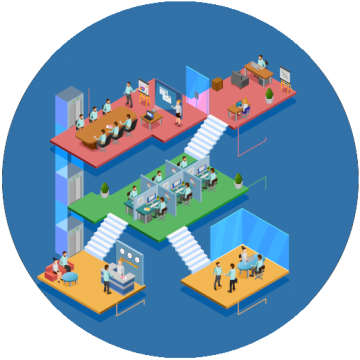
The technological and humanities laboratories currently active within the Department will be consolidated into a single location, forming a Cultural and Technological Hub. This will promote the development of pilot studies on the project's three strands and facilitate the exchange between research and teaching.
This will enable the development of innovative teaching strategies to combat school dropout and abandonment, interventions for promoting cultural and community welfare (solidarity networks), and continuity with some actions of M.U.S.A. spoke 6 (Open Air Lab for the development of the Bicocca cultural district; Youth Forum and Generations Festival).
Excellence Department - Visiting Fellowship Program
Image

The commitment to transforming the Department into an increasingly international hub for research and teaching begins with building relationships and exchanges with partners from around the world.
To this end, one of the key tools being deployed is the enhancement of the Visiting Fellowship Program. Each semester, international scholars and faculty are hosted by the Department to share the latest findings from their research, to develop new projects, to offer guidance and mentorship to PhD students and young researchers, and to deliver lectures and seminars for master’s degree students.
Below is an up-to-date list of the Visiting Fellows who have contributed, and are continuing to contribute, to the growing internationalization of the Department with their presence:
| NOME | COGNOME | ENTE | NAZIONE | TIPOLOGIA | PERIODO |
|---|---|---|---|---|---|
| Paride | Bollettin | Università di Marik | Rep. Ceca | Visiting researcher | 01/04/2024 - 31/05/2024 |
| Elisabetta | Costa | University of Antwerp | Belgio | Visiting professor | 15/04/2024 - 15/06/2024 |
| Saheen Ashraf | Kagee | Stellenbosch University | Sudafrica | Visiting professor | 01/06/2024 - 31/07/2024 |
| Fayez | Mahamid | An-Najah National University | Palestina | Visiting professor | 20/06/2024 - 20/07/2024 |
| Viktor | Fenyvesi | Jyväskylä University | Finlandia | Visiting professor | 01/10/2024 - 01/11/2024 |
| Anton Braxton | Soderman | University of California, Irvine | USA | Visiting professor | 15/01/2025 - 15/03/2025 |
| Cindy | Sousa | Bryn Mawr College, Philadelphia | USA | Visiting professor | 12/04/2025 - 11/06/2025 |
| Ron | Smith | Bucknell University | USA | Visiting professor | 12/04/2025 - 11/06/2025 |
| Ermina | Colucci | Middlesex University | Regno Unito | Visiting professor | 15/04/2025 - 15/06/2025 |
| Magda | Pischetola | University of Copenaghen | Danimarca | Visiting professor | 01/10/2025 - 31/10/2025 |
| Luana | Bruno | Complutense University of Madrid | Spagna | Visiting professor | 13/01/2026 - 12/02/2026 |
| Alex Giuliano | Vailati | Universidade Federal de Pernambuco | Brasile | Visiting professor | 09/03/2026 - 09/05/2026 |
| Massimo | Riva | Brown University - Providence | Stati Uniti | Visiting professor | 16/04/2026 - 16/05/2026 |
| Alex | Barco Martelo | Universidad de Deusto | Spagna | Visiting researcher | 07/07/2026 - 07/08/2026 |
| Sergio Paulo | Fochi | Universidade do Vale do Rio dos Sinos | Brasile | Visiting researcher | 01/11/2026 - 31/12/2026 |
Excellence Department - Summer e winter school
Image

These training events, aimed primarily at students, are intended to explore how the rapid technological acceleration we are experiencing profoundly affects three major areas of study and intervention: the contrast of socio-cultural and educational inequalities, the formation of identities, and the strengthening of social ties.
Methodological opportunities and challenges for socio-educational research with communities at risk of invisibility
This Winter School - January 26-30, 2026 - critically examines digital methods for researching communities and issues at risk of invisibility, with examples including (but not limited to) migrant experiences, LGBTQIA+ identities, underrepresented forms of knowledge, disability rights, gender-based violence, and political activism. It frames media ecologies as dynamic spaces of informal learning where identities are negotiated, knowledge is produced, and cultural practices may reinforce or challenge dominant narratives.
The school emphasizes the need to problematize how digital methods are used, looking beyond their technical application to their epistemological, methodological, ethical, and political dimensions. By drawing on perspectives from media ecology, critical pedagogy, and feminist epistemologies, participants will explore how digital environments both constrain and enable visibility, voice, and agency.
Through a combination of seminars, workshops, and collaborative discussions, the program fosters reflection on the role of digital media in processes of inclusion and exclusion, and offers hands-on engagement with qualitative approaches—from exploratory observation to dataset construction and analysis.
Designed for Master’s degree holder, PhD students as well as early-career researchers, the Winter School provides conceptual grounding and practical tools to carry out socio-educational research attentive to issues of marginalization, visibility, and epistemic justice.
The International Summer School took place from 1 to 5 September 2025 in the splendid setting of Villa del Grumello, Como.
The international Summer School is organized by the Lake Como School for Advanced Studies and coordinated by the scholars of the WP5/Spoke 10 group within the national project Age-IT. Ageing well in an ageing society (PNRR): Prof. Laura Formenti (University of Milano-Bicocca), Prof. Amelia Compagni (Bocconi University), Prof. Cristina Mele (University of Naples Federico II), and Prof. Tiziana Nazio (University of Turin/University of Eastern Piedmont), in collaboration with: CAPTED – Departmental Research Centre for Changes and Educational Potentials in the Digital Transition, University of Milano-Bicocca; the LEAA Board (Learning & Education for Active Ageing, Age-IT); ESREA; RUIAP; and the doctoral programme Education in the Contemporary Society at the University of Milano-Bicocca.
The School addresses the theme of transitions, adopting the theoretical and epistemological framework of complexity and the perspective of “doing transitions” as an overarching lens for interdisciplinary research on ageing. Participants will be actively engaged through keynote lectures and discussions, methodological workshops, doctoral and early-career research presentations, personalized supervision sessions, and collaborative writing groups, under the guidance of four distinguished keynote speakers and a wide range of international experts from diverse research fields—including adult education, life-course sociology, (co-)design of services, technological (co-)design, critical and social gerontology, and more. Research will be presented and discussed drawing on qualitative, quantitative, dialogical, participatory, and critical approaches, with the aim of developing complex interpretations of longevity and of the challenges it poses for education, care, social networks, services, and territorial transformations.
Today interdisciplinarity has become indispensable in research, as complex problems require the convergence of multiple perspectives to open up non-linear pathways of understanding and intervention—pathways that remain open to possibilities while respecting the rights, needs, and aspirations of the people involved. Yet, this path is demanding: it requires rigorous methodological grounding as well as an awareness of potential obstacles and solutions.
The School’s objective is to offer an immersive, dialogical, and intensive experience for doctoral candidates, early-career researchers, postdoctoral fellows, and senior scholars alike, fostering the development of new ideas, nurturing interdisciplinary dialogue, and encouraging collaboration on future projects. Proposals are especially welcome on lifelong learning in later life, intergenerationality, transformations in contemporary life-course trajectories, the co-design and generative evaluation of services, technological tools, and media, as well as measures to promote service accessibility, active ageing, and locally and nationally sensitive policies.
The Summer School, organised as part of the Critical Theory of Society programme – under the academic supervision of Vittorio Morfino and Stefano Pippa – took place between 4 and 7 September 2024.
The spectre of digital capitalism is haunting the world.
The so-called “AI boom” of the past few years has now taken centre stage in the public debate, scientific research, and in the political agendas of international institutions.
As the Global North seems to have embarked on a relentless journey towards the digital restructuring of our societies, the digital transition has given rise to new problems regarding the societal and political implications of new technologies.
Is a new form of digital capitalism emerging from the interplay of digital technology and pre-existing social relations? What is the direct impact of digital technology on human labour? How does this affect our life as a whole? And how is it revolutionising the public sphere?
More urgently, what is the role of emancipatory politics in this scenario?
These are some of the questions that tech enthusiasts and technophobes alike are ill-prepared to address.
The third edition of the Lake Como Summer School in Critical Theory of Society will gather scholars of renowned reputation to discuss these issues from different perspectives.
From 29 to 31 May 2024, the “Emotional Ergonomics of Immersive Virtual Environments (EEIVE)” summer school took place, under the scientific direction of Alessandro Pepe and Eleonora Farina.
The Summer School on Emotional Ergonomic of Immersive Virtual Environment (EEIVE) will offer an interdisciplinary training program for PhD students and early-career professionals, with the goal of enhancing knowledge on themes related to emotional ergonomics of immersive virtual environments. Since its inception, ergonomics has helped make technological advancement and innovation more accessible to humankind. Recent years have seen a real paradigm shift in the field of cognitive ergonomics, which studies the interaction between the human cognitive system and information processing tools.
As technology develops, the creation of virtual and immersive environments presents fresh difficulties for anybody wishing to research human-machine interaction in these settings. The new paradigm shift relates to the study of how the human emotional system interacts with virtual spaces, which is known as emotional ergonomics of virtual environments. In other words, ergonomics as a design for the body has given way to cognitive ergonomics, a design for thinking, and then to emotional ergonomics, a design for people's inner states.
The Summer School on Emotional Ergonomic of Immersive Virtual Environment (EEIVE) aims at deepening theoretical and methodological domains linked to human-computer interaction with a specific focus on using multisensory approaches for researching the human experience. It will include lectures and group-work sessions led by scholars of national and international standing.